
Contact Us
Let MSR Surveying LTD provide the professional insights you need to maintain and enhance the value of your property assets.
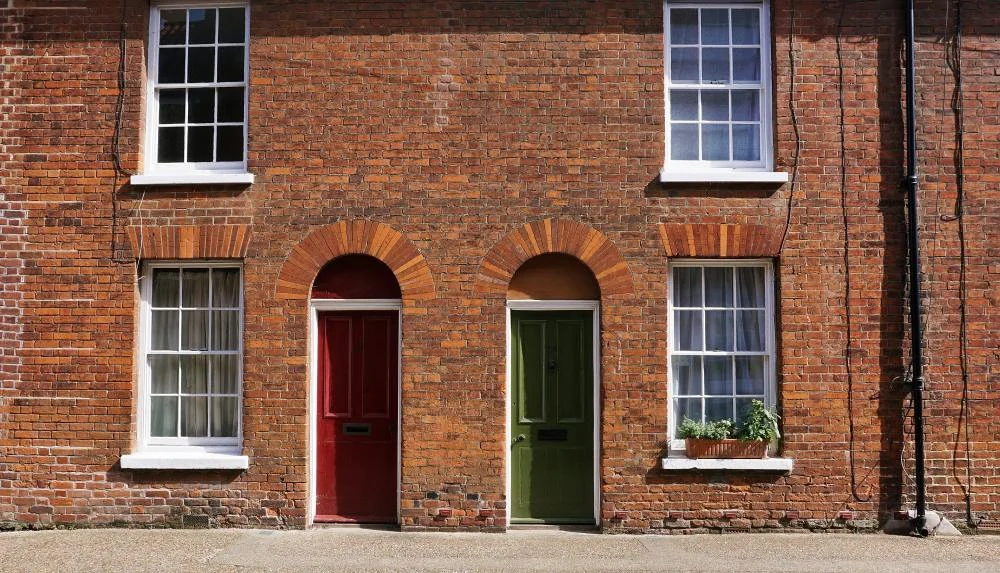
Starting a building project? Avoid potential issues and costs by securing the right party wall advice early. If you plan to excavate foundations within 3.0 metres of a neighbour’s property, even without work on a party wall, you may need guidance under the Act.
If your neighbour intends to work on a shared wall, they are required to serve party wall notices, irrespective of their planning permissions. Ensuring your property is protected during their works is crucial. Our experienced, independent RICS-qualified surveyors have extensive knowledge in party wall surveying and can assess plans, inspect properties for condition prior to and post-work, and help address any damage.
You cannot be stopped from renovating your property legally, but your neighbour can influence the work. Engage a surveyor promptly to avert unexpected costs or frustrations.
The Party Wall Act 1996 outlines property owners’ rights and responsibilities regarding work near party walls. It aims to protect properties from damage. Ignoring these rules can lead to costly civil actions.
A party wall stands on or near the boundary between properties. In London and the Southeast, most homes have party walls due to their semi-detached or terraced nature. Even detached homes can have these walls if they sit on the boundary. Garden walls may also qualify as party fence walls.
Consider the Party Wall Act if you or your neighbour are building near a party wall. Common scenarios include constructing or altering party walls or excavating near a neighbour’s foundations.
Minor works that don’t affect structural integrity typically do not require notifying your neighbour, such as drilling for shelves or replacing plaster.
Communicate with your neighbour early to facilitate a smoother process. A formal written notice outlining the proposed works must be served at least two months before starting work directly on a party wall and one month for other works.
A legally binding document created by appointed surveyors detailing each owner’s responsibilities regarding the works, including managing damages, working hours, and access rights. An award resolves disputes and becomes final unless challenged within a specified timeframe.
Typically, the party initiating the work covers the relevant costs, although costs may be shared if a defect affects both properties.
In case of disagreement, the Act offers avenues for resolution, including appointing a surveyor to act for a reluctant neighbour.
With over 15 years of experience in building surveying and numerous party wall awards created, we provide expert advice at competitive rates. If you’re planning a project involving notifiable works or have been notified of your neighbour’s works that may affect you, contact us to discuss your needs and receive a free estimate.
Let MSR Surveying LTD provide the professional insights you need to maintain and enhance the value of your property assets.
| The law | Party Wall etc. Act 1996, which applies in England and Wales |
| Work that is notifiable | Work to a shared wall, building a new wall at or astride the boundary, and excavating close to a neighbouring building |
| Notice period — party structure notice | Two months before the work starts |
| Notice period — line of junction and adjacent excavation | One month before the work starts |
| If the neighbour dissents | Surveyors are appointed and a party wall award is made before the work begins |
| Who pays | Usually the building owner carrying out the work; the award settles it |
| We act for | Building owners and adjoining owners, and as agreed surveyor where both sides want one |
| Areas covered | London, Essex and the Home Counties |
The Act works through notices. Which notice you serve depends on the work, and getting it wrong is the most common reason a project stalls.
| Party structure notice | Work to an existing shared wall or structure — cutting in, removing a chimney breast, raising or underpinning it. Two months’ notice. |
| Line of junction notice | Building a new wall at or astride the boundary where none exists. One month’s notice. |
| Adjacent excavation notice | Excavating within three metres of a neighbouring structure and deeper than its foundations, or within six metres on the deeper test. One month’s notice. |
A single basement or rear extension can trigger more than one of these at the same time, on more than one boundary.
Your neighbour has fourteen days to respond. If they consent in writing, the matter is closed and you can proceed. If they dissent, or say nothing at all, a dispute is deemed to have arisen under the Act and surveyors are appointed. That is not a falling-out; it is the ordinary route, and most awards are made without any argument between the owners.
From there the owners either appoint a single agreed surveyor, which is quicker and cheaper, or each appoints their own. The surveyors then record the condition of the adjoining property in a schedule of condition, and make the award.
The award is binding on both owners and on their successors, and either owner may appeal it to the county court within fourteen days of service.
It happens, usually by accident, and it leaves the building owner exposed. The adjoining owner can seek an injunction to stop the work, and the protection the Act gives the building owner — the right of access, the agreed record of condition, the authorised method — is simply not there. If work has already started, tell us; the position is recoverable, but it is easier to deal with in the first week than in the third month.
When you intend to work on a shared wall or structure, build a new wall at or astride the boundary, or excavate close to and below the level of a neighbouring building’s foundations. A party structure notice needs two months; line of junction and adjacent excavation notices need one month.
Silence counts as dissent. If your neighbour does not respond within fourteen days, a dispute is deemed to have arisen under the Party Wall etc. Act 1996 and surveyors are appointed. It is the normal route rather than a sign of conflict, and most awards are made without any argument.
Yes. Where both owners are content, a single agreed surveyor is appointed to act impartially for both, which is quicker and costs less than two appointments. Where the owners would rather each have their own surveyor, that is also provided for and the two surveyors work together to make the award.
The award is the document that authorises the work and sets the terms. It describes the work, how and when it may be carried out, access arrangements, who pays the surveying costs, and it attaches a schedule of condition of the adjoining property recorded before work begins.
In most cases the building owner carrying out the work pays, including the cost of the adjoining owner’s surveyor, on the basis that the work is being done for their benefit. The award settles the allocation, and it can differ where an adjoining owner asks for work beyond what the Act requires.
The adjoining owner can seek an injunction, and the building owner loses the protections the Act gives — the right of access, the agreed record of condition and the authorised method of work. The position is usually recoverable, but it gets harder the longer it is left.
In practice, yes. The condition of the adjoining property is recorded before the notifiable work starts and attached to the award, and the property is re-inspected afterwards. It is the document that settles whether damage is new or was already there. See schedules of condition.
If you are not sure which report you need, say so and we will tell you. Call 020 3318 9426, email info@msrsurveying.co.uk or ask for a quote. There are more answers on our RICS survey questions page.